

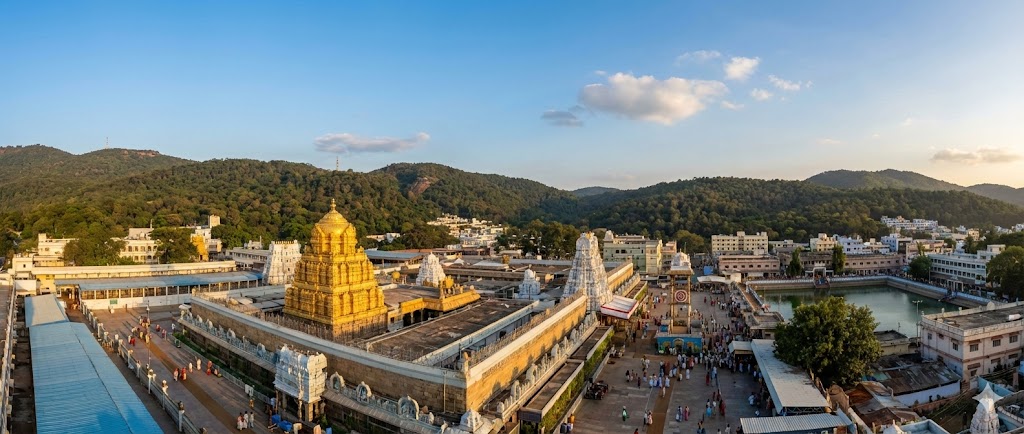
Lord Venkateswara located atop the Seshachalam hills in Andhra Pradesh, Tirumala is not merely a temple; it is a phenomenon. It is often referred to as the “Bhuloka Vaikuntham” (The Abode of Vishnu on Earth). Every day, tens of thousands of devotees chant “Govinda! Govinda!”, creating a vibration of faith that can be felt the moment you step onto the sacred hills.
But what makes the Tirumala temple so significant? Why do millions flock to see Lord Venkateswara, the Lord of the Seven Hills?
1. The Legend of Lord Venkateswara
According to the Varaha Purana and other sacred texts, Lord Vishnu manifested on Earth as Lord Venkateswara (also known as Balaji or Srinivasa) to save humanity from the trials and tribulations of the Kali Yuga.
The legend speaks of the Lord’s descent to earth, his residence in an anthill, and his marriage to Goddess Padmavathi. It is believed that the Lord borrowed wealth from Kubera (the God of Wealth) for his wedding celebrations. To this day, devotees donate to the Hundi (donation pot) to help the Lord repay the interest on this celestial debt.
Did You Know? The name “Venkateswara” translates to “The Lord who destroys sins” (Vem = Sins, Kata = Destruction, Ishwara = Lord).
2. The Swayambhu (Self-Manifested) Deity
The main attraction is, of course, the idol of the Lord himself. The deity in the Garbhagriha (Sanctum Sanctorum) is Swayambhu, meaning it was self-manifested and not sculpted by human hands.
Standing majestically, the Lord is adorned with precious jewels, including the famous Sahasranama Kasula Haram and the diamond crown. However, it is the eyes of the Lord, often covered by the Namam (a large camphor mark), that hold the most power. It is said that the cosmic energy radiating from his eyes is so powerful that they must be partially covered to avoid overwhelming the devotees.
3. Unique Rituals and Offerings
The rituals at Tirumala are unlike any other temple in India. They follow the Vaikhanasa Agama tradition strictly.
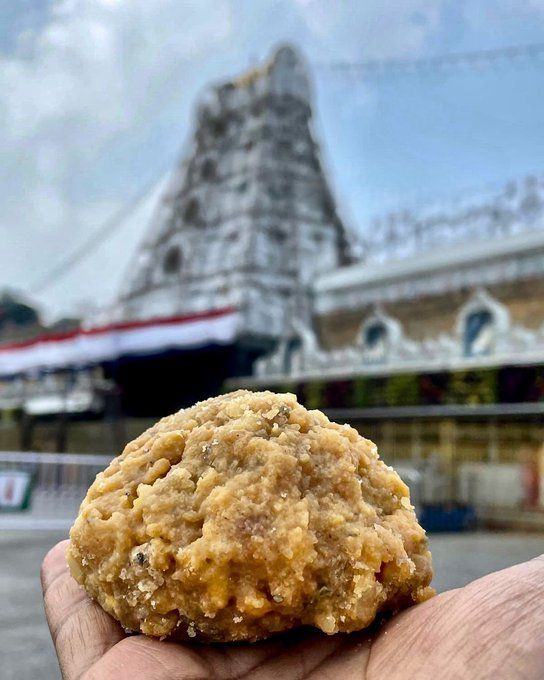
- The World-Famous Laddu: The Srivari Laddu is not just a sweet; it is a divine emotion. Made with pure ghee, cashews, raisins, and gram flour, it has a distinct taste that cannot be replicated anywhere else. It even holds a Geographical Indication (GI) tag!
- Head Tonsure (Gundu): Devotees voluntarily shave their heads as an offering to the Lord. This signifies the shedding of the ego and vanity, surrendering completely to the Divine.
- Thulabharam: Devotees weigh themselves against items like sugar, jaggery, coins, or bananas, and donate the equivalent weight to the temple.
4. Architectural Marvel and Wealth
The temple represents the pinnacle of Dravidian architecture. The Vimana (tower) above the sanctum is known as the Ananda Nilayam (Abode of Bliss) and is plated with pure gold.
Tirumala is widely regarded as the richest temple in the world in terms of donations received. However, the true wealth of the temple lies in its ability to feed roughly 100,000 people daily through the Nitya Annadanam (free food distribution) program, executed with flawless precision.
5. The Spiritual Trek
For many, the pilgrimage begins at the foot of the hills. Devotees walk up the steps from Alipiri or Srivari Mettu.
- Alipiri Route: Approximately 3,550 steps (9 km).
- Srivari Mettu: A shorter but steeper route of 2,388 steps (2.1 km).
Walking these paths is considered an act of penance and devotion, preparing the mind for the Darshan (viewing) of the Lord.
Conclusion: A Life-Changing Experience
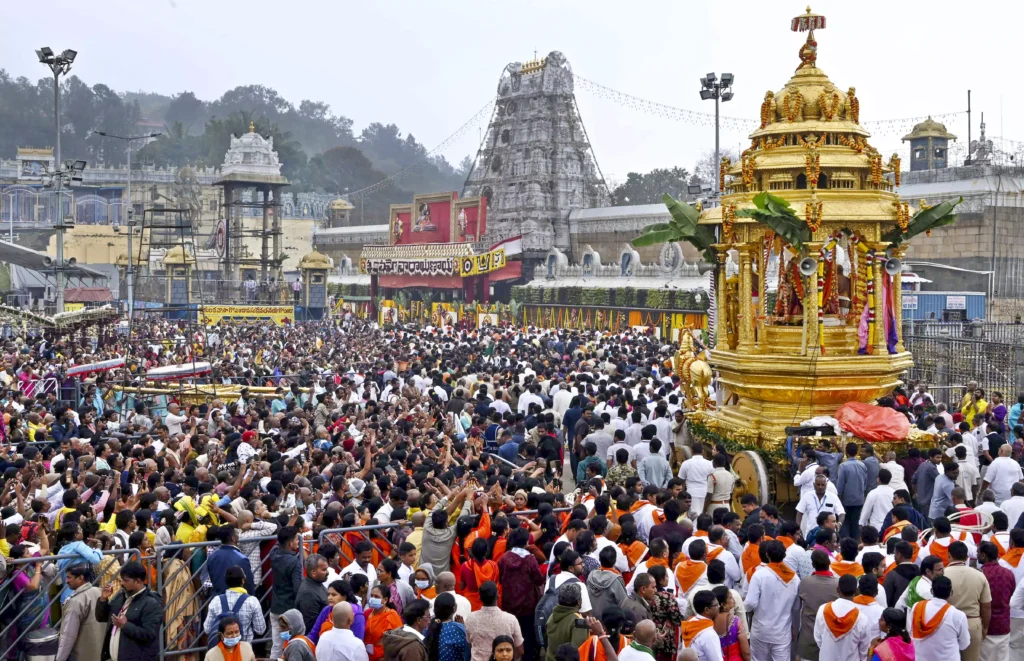
Visiting Tirumala is often described as a spiritual reset. Despite the long queues and the rush, the fleeting second when you stand before the idol of Lord Venkateswara brings a sense of inexplicable peace. It is a reminder that in the chaos of the modern world, faith remains a constant anchor.
Whether you go for the architecture, the history, or the deep spiritual connection, the Seven Hills will welcome you with open arms.
Om Namo Venkatesaya!
Travel Tips for Pilgrims
- Book in Advance: Always book your Special Entry Darshan (Rs. 300 tickets) online via the TTD website at least 2-3 months in advance.
- Dress Code: Traditional Indian attire is mandatory (Dhotis/Pyjamas for men, Sarees/Chudidars for women).
- Best Time to Visit: While it is a year-round destination, weekdays are generally less crowded than weekends or festival days.
More info about tirumala temple and schedules of temple can be found at www.tirumala.org
Love travelling? Visit our Travel blogs for worthy suggestions
Leave a Reply