
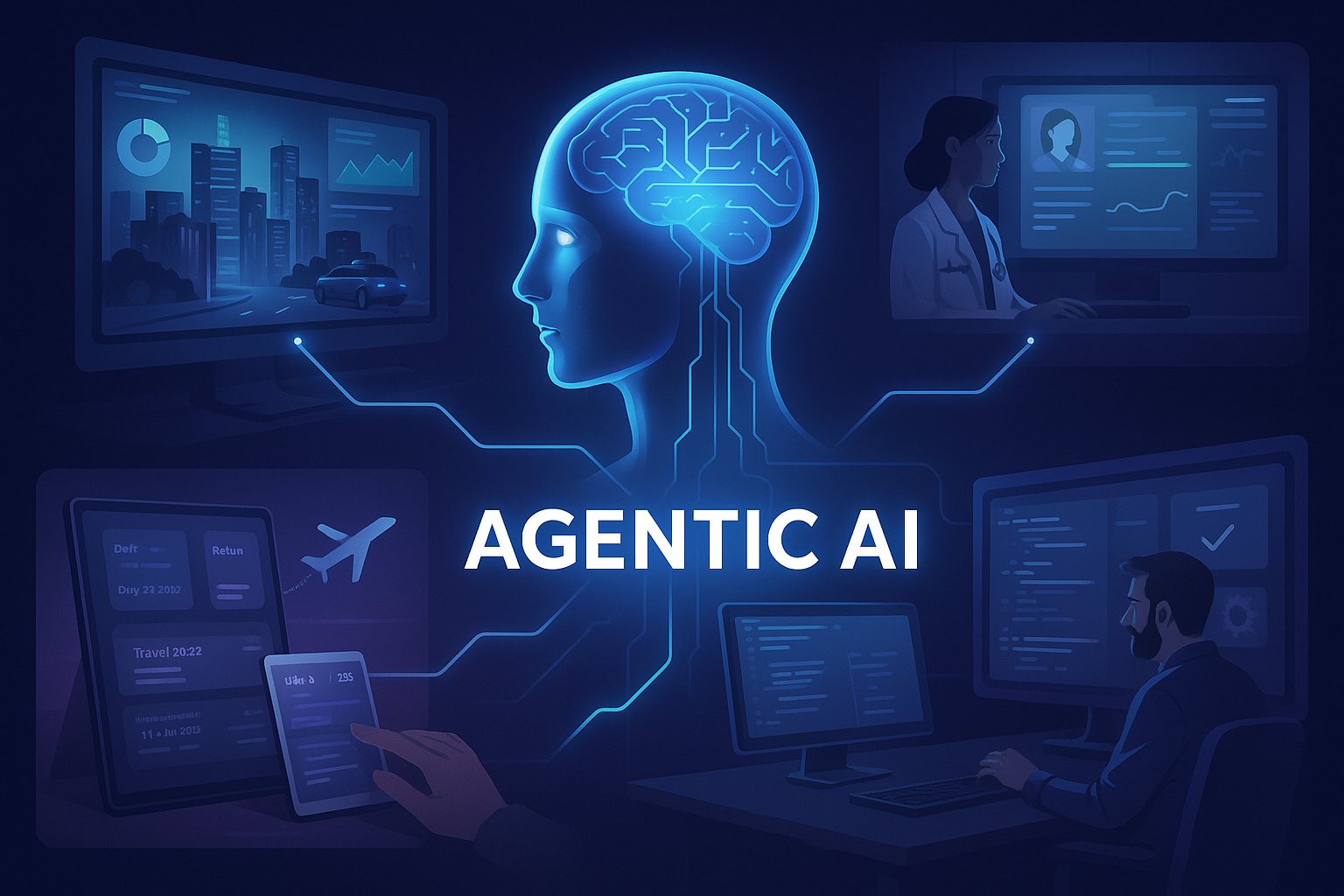
Introduction: From Assistance to Action
In our previous article on Agentic AI, we explored how autonomous AI systems think, plan, and act independently; building on that foundation, this guide focuses on the Real-World Use Cases of Agentic AI that are already shaping industries in 2026 and beyond.
Artificial Intelligence is entering a new phase of evolution. While Generative AI focuses on creating content, Real World Use Cases of Agentic AI are demonstrating how autonomous systems can plan, decide, and execute actions without continuous human input.
In 2026 and beyond, Real World Use Cases of Agentic AI are rapidly expanding across industries such as healthcare, travel, finance, enterprise operations, and smart devices. This article explores how Real World Use Cases of Agentic AI are transforming everyday life and redefining productivity.
🔹 Agentic AI Use Cases – Quick Summary
- Agentic AI autonomously plans and executes tasks
- Used in healthcare, travel, finance, DevOps, and enterprises
- Reduces manual intervention and decision fatigue
- Expected to become mainstream by 2026
What Is Agentic AI? (Quick Recap)
According to the broader definition of autonomous systems outlined by Wikipedia, agentic intelligence refers to systems capable of goal-driven decision-making and independent action.
Agentic AI refers to artificial intelligence systems that can:
- Understand goals
- Plan multi-step actions
- Interact with tools, APIs, and environments
- Learn from feedback
- Execute tasks autonomously
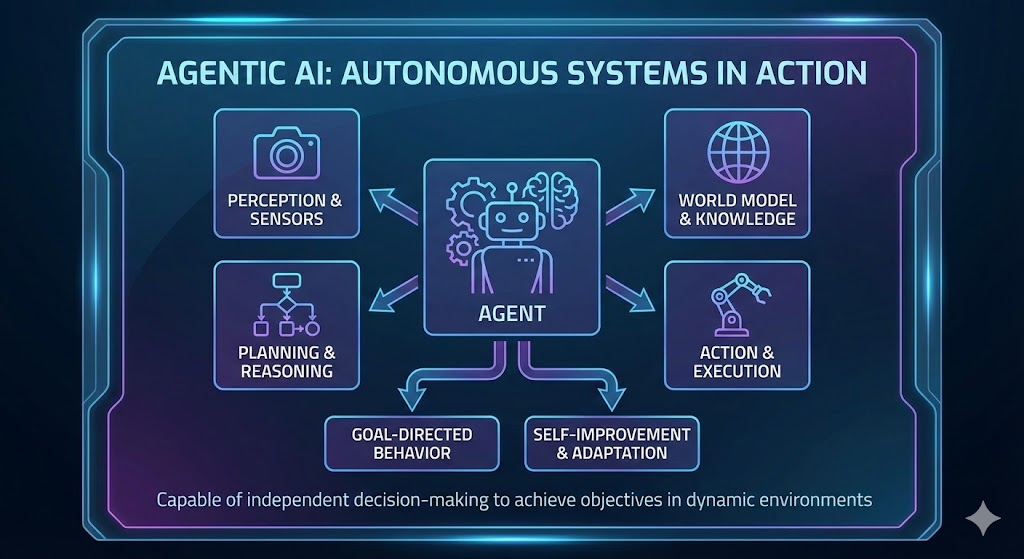
Unlike traditional AI or chatbots, Agentic AI doesn’t just respond—it acts.
Real World Use Cases of Agentic AI in 2026 & Beyond
1. Agentic AI in Customer Support: Self-Resolving Systems
Customer support is one of the fastest adopters of Agentic AI.
How it works:
- Detects customer issues automatically
- Diagnoses root causes
- Executes fixes (refunds, resets, replacements)
- Closes tickets without human intervention
Real world impact:
- 24/7 autonomous support
- Reduced response time from hours to seconds
- Lower operational costs
Example:
An Agentic AI identifies a failed subscription payment, retries billing, updates the customer, and resolves the issue—without a support agent.
2. Agentic AI in Software Development & DevOps
In 2026, Agentic AI has become a co-worker for developers.
Key capabilities:
- Detects bugs from logs
- Writes and tests code fixes
- Deploys updates automatically
- Rolls back if errors are detected
Why this matters:
- Faster release cycles
- Fewer production failures
- Self-healing systems
Agentic AI in DevOps doesn’t just monitor—it takes corrective action.
3. Real World Use Cases of Agentic AI in Travel Planning
For travel platforms and explorers, Agentic AI is a game changer.
Autonomous travel agents can:
- Plan complete itineraries
- Book flights, hotels, and local transport
- Adjust plans in real time due to delays or weather
- Optimize costs and preferences automatically
2026 scenario:
You set a goal: “Plan a 5-day spiritual trip to South India.”
Agentic AI handles everything—from bookings to daily schedules.
This is especially impactful for travel blogs and platforms like SmartExplorer.in.
4. Agentic AI in Healthcare: Autonomous Care Coordination
Healthcare systems are adopting Agentic AI to reduce human overload.
Use cases include:
- Monitoring patient vitals continuously
- Detecting anomalies early
- Scheduling tests and follow-ups
- Alerting doctors only when intervention is needed
Future impact:
- Faster diagnosis
- Reduced hospital workload
- Better patient outcomes
Agentic AI acts as an intelligent care coordinator, not just a data analyzer.
5. Agentic AI in Finance & Personal Wealth Management
In finance, Agentic AI goes beyond dashboards.
What it can do:
- Monitor spending patterns
- Automatically rebalance investments
- Pay bills on time
- Detect fraud and freeze accounts proactively
2026 reality:
Your AI agent acts as a personal CFO, making decisions aligned with your financial goals.
6. Real World Use Cases of Agentic AI in Enterprise Operations
Large organizations use Agentic AI to automate entire workflows.
Examples:
- HR onboarding and compliance
- Procurement and vendor negotiations
- Inventory forecasting and reordering
- Automated reporting and audits
Instead of managing tools, businesses manage outcomes.
7. Real World Use Cases of Agentic AI in Smart Homes & Devices
Agentic AI is moving into everyday life through devices.
Capabilities include:
- Managing energy usage
- Scheduling maintenance
- Coordinating devices seamlessly
- Learning habits and optimizing routines
Your smartphone or home hub becomes an autonomous assistant, not a passive interface.
How Agentic AI Differs From Generative AI in Real Life
| Feature | Generative AI | Agentic AI |
|---|---|---|
| Responds to prompts | ✅ | ❌ |
| Creates content | ✅ | ✅ |
| Executes actions | ❌ | ✅ |
| Multi-step planning | ❌ | ✅ |
| Autonomous decision-making | ❌ | ✅ |
This distinction explains why Agentic AI use cases are expanding rapidly in 2026.
One of the strongest indicators of AI maturity is the rise of Real World Use Cases of Agentic AI that go beyond experimentation. Unlike traditional automation, Real World Use Cases of Agentic AI focus on outcomes rather than isolated tasks, making them highly valuable in complex, real-life environments.
Benefits of Agentic AI Adoption
- Increased efficiency
- Reduced human workload
- Faster decision-making
- Scalable automation
- Continuous learning systems
Agentic AI shifts focus from task execution to goal achievement.
Risks & Responsible Use of Agentic AI
Despite its power, Agentic AI requires safeguards:
- Human-in-the-loop controls
- Clear permission boundaries
- Ethical alignment
- Security oversight
Responsible design ensures autonomy does not become unpredictability.
The Future of Agentic AI Beyond 2026
Looking ahead:
- Agentic AI will power operating systems
- Smartphones will act on behalf of users
- Businesses will deploy AI agents per department
- Human roles will evolve toward supervision and strategy
Agentic AI marks the beginning of action-based intelligence.
Final Thoughts: Why Agentic AI Matters Now
Agentic AI is not just another trend—it is a fundamental shift in how humans interact with technology. By enabling systems that can plan, decide, and act, we move from AI as a tool to AI as a partner.
Understanding real world use cases of Agentic AI in 2026 & beyond is essential for businesses, creators, and individuals preparing for the next wave of digital transformation.
❓ FAQ
Q1: What is Agentic AI?
Agentic AI is an autonomous AI system that can plan, decide, and act independently to achieve specific goals.
Q2: How is Agentic AI different from Generative AI?
Generative AI creates content, while Agentic AI executes actions and manages workflows autonomously.
Q3: Where is Agentic AI used in real life?
Agentic AI is used in customer support, healthcare, finance, travel planning, DevOps, and smart devices.
Q4: Is Agentic AI safe to use?
Yes, when designed with proper controls, ethical guidelines, and human oversight.
Leave a Reply